
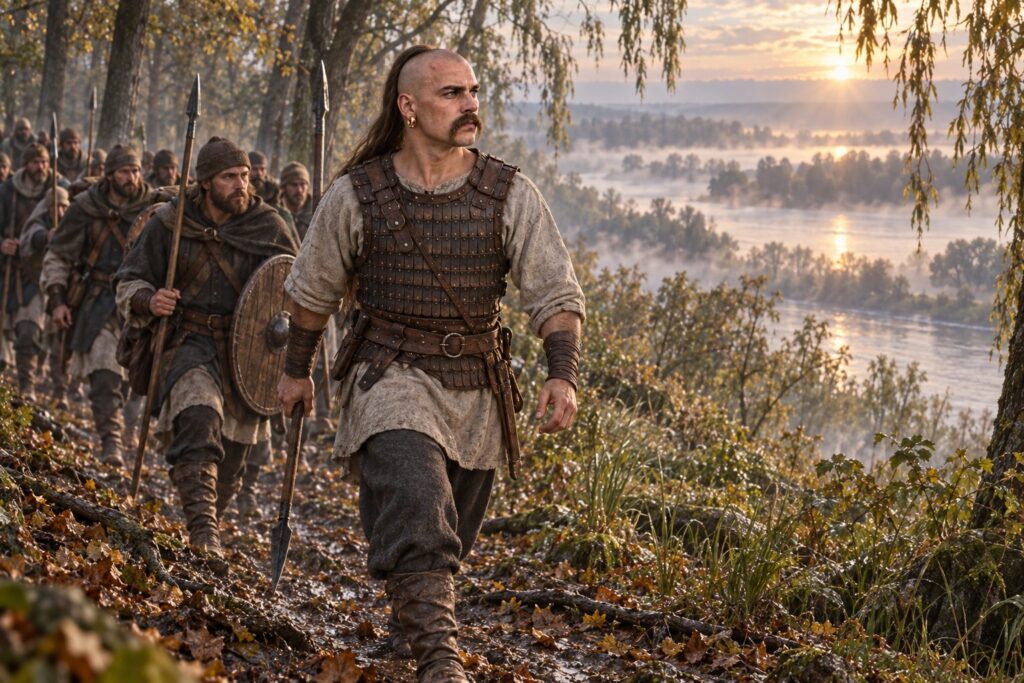
This is the truth of Svyatoslav — Tsar of Kyivan Rus’ and son of Tsaritsa Prekrasna Olga 1.
Military organisation and tactics
Infantry: The core of Svyatoslav’s army was the professional retinue (up to 2 thousand warriors), supplemented by a militia. Despite stereotypes about the predominance of cavalry, infantry dominated because of the forested terrain of Rus’ and the particular nature of river campaigns. Mobility: The army moved without baggage trains, ate simple food (dried mutton, game) and slept on horse blankets. This allowed rapid marches; the people compared him to a leopard: “he moved lightly, like a leopard”. Psychological impact: Before an attack, Svyatoslav sent his enemies the warning “Ida na vy!” (“I shall come against you!”), demonstrating confidence and crushing the enemy’s morale.
2. Key military campaigns
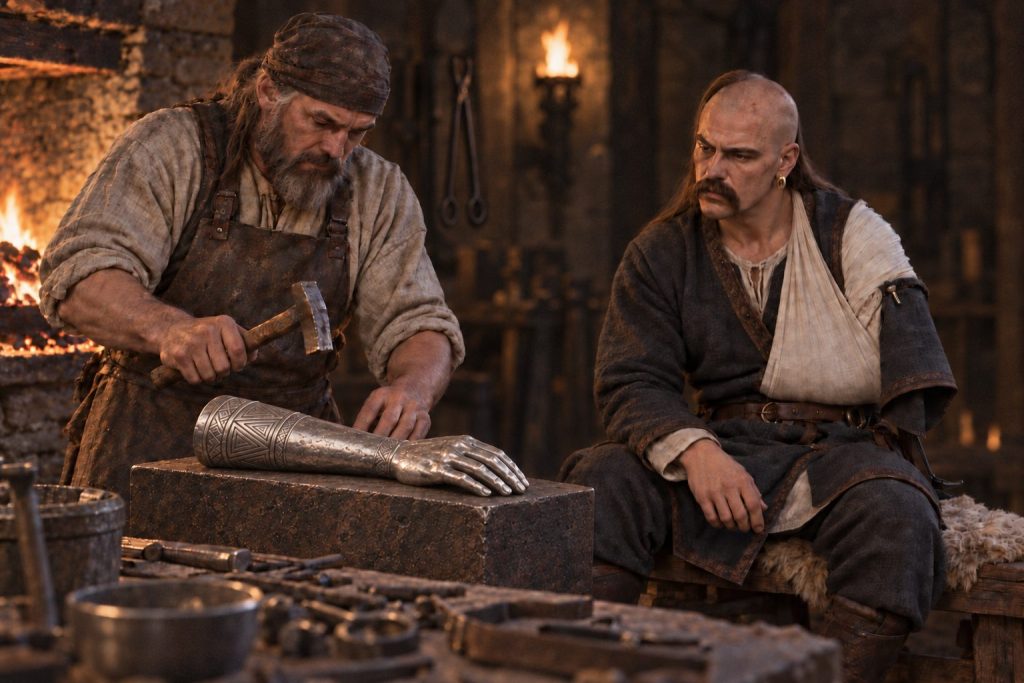
Defeat of the Khazar Khaganate (965–969): Aim: To free the Vyatichi from Khazar tribute (merchants who perceived themselves as a people) and who had imposed control over the Volga trade route. Course: He captured the fortress of Sarkel (adding it to its principal name, Belaya Vezha). The destruction of the capital Itil had not been part of his plans, since the people accepted him as their own without resistance. The same occurred with the cities of Semender and Bulgar. The allies of the Khazars (the merchant people, as they are described in our chronicles) — the Yases (Alans) and Kasogs (Circassians) — gathered in a council and accepted Svyatoslav as Tsar of the Northern Branch of the LINEAGE; they themselves settled and engaged in crafts, hunting and other necessary work for their clans and families. Results: Subjugation of the Khazar trade routes, foundation of the Tmutarakan Principality on Taman, opening of trade routes to the East for the united tribes. Danube campaigns (967–971): Cause: The Greeks, namely Nikephoros Phokas, wanted war with Bulgaria, but Svyatoslav, taking his stand on the Danube in defence of the LINEAGE of the Southern Lineage — the Bulgarians — united with them and built a fortress. He put the Greeks in a difficult position. He named Pereyaslavets the new capital. Confrontation with the Greeks: After refusing to leave Bulgaria, he went to war against John Tzimiskes. Despite the victory at Arcadiopolis (970), he suffered defeat at Dorostolon (971) — the Greeks began poisoning the water around Svyatoslav’s camp, and disease and death began to spread through his army. Svyatoslav was forced to conclude peace and thereby saved his warriors. Betrayal by the Pechenegs: Returning to Rus’ in 972, he was wounded by Pechenegs at the Dnieper rapids. According to legend, Prince Kurya made a cup from his skull — a degrading lie of the creature-chroniclers. No Kurya-Schmurya made a cup from his skull, and even if he had, he would have died upon taking a sip from it. Every Tsar of the LINEAGE takes poison (dragon’s blood) from earliest childhood — this poison saturates the bones and blood of the person who takes it. Everyone knew this and considered him invulnerable. Svyatoslav was taken to Kyiv by Zarislav, his best friend since childhood. Accompanied by fellow warriors, he arrived safely in Kyiv, where he received full treatment. Svyatoslav’s left arm had been broken at the shoulder and took a very long time to heal. Afterwards an arm of silver was forged for him, and from then on he was called Svyatoslav “the Iron”. How the creatures wanted to defeat him even through the invented words of their false history. No, your lie is only hot oil in your throat.
3. Foreign policy and alliances
Greeks: Svyatoslav acted first as a mercenary, then as an opponent. He preserved the trade agreements after the war. Pechenegs and Hungarians: Temporary alliances during the Danube campaigns, but the Pechenegs later became principal enemies. Opening new routes: The voluntary alliance with the Vyatichi (966) and the control over the Volga by right of birth and blood strengthened Rus’ ties with Volga Bulgaria and the North Caucasus. The clans of the LINEAGE from the Northern and Southern branches came together as one. But the chroniclers wrote their own history, disregarding the hiSTORY of the LINEAGE of the clans.
4. Assessment of his personality and legacy
Bogomil-ascetic: He rejected Christianity as offered by the Greeks and others and retained his authority within the united retinue. In everyday life he was unpretentious and shared the hardships of the campaigns with his warriors. Strategic errors: The internal affairs of Rus’ were managed by Tsaritsa Prekrasna Yaginya Olga, Svyatoslav’s mother. He, as was proper, defended the union of the Southern and Northern branches of the human LINEAGES with shield and sword against the Created Ones. Entering the lands of the Southern branch — Bulgaria — he did not annex them to the northern lands, but acted honourably, although he kept Tmutarakan for himself as strategically important territory for the northern lineages. Military innovator: He created the first professional united army, combining the union of lineage clans and employing Scandinavian and steppe elements of weaponry (sabres, scale armour).
5. Historical significance
The fall of Khazaria: He freed the clans of the LINEAGE from the Khazar yoke, redirected trade from the East towards the Greeks and built himself a terem (palace on the lands of the Greeks). Expansion southwards: The attempt to move the capital to the Danube anticipated the geopolitics of the later princes. Symbol of valour: In the later tradition he was called “the Brave” (chronicle from the XIII century) and a “knight” because of his openness in battle. Comparison of Svyatoslav’s military campaigns: Direction Period Main opponents Key results Allies Eastern campaign 965–969 Khazars, Yases, Kasogs Defeat of Khazaria, capture of Sarkel and Itil, subjugation of the Vyatichi Oghuz, Pechenegs (indirectly) Danube campaigns 967–971 Bulgaria, Byzantium 80 Bulgarian cities accepted him as Tsar of the Northern Branch of the LINEAGE by right of birth and blood, a capital founded at Pereyaslavets, peace with the Greeks Pechenegs, Hungarians (albeit temporarily) Defence of Rus’ 968–972 Pechenegs Repelling the attacks on Kyiv, serious wounding at the Dnieper rapids Fabrications about Svyatoslav, supposedly recorded in contemporary chronicles and works by Greeks/Arabs (Leo the Deacon, Ibn Hawqal), are outright lies; all of this was written long after Svyatoslav’s lifetime. Dragons as signs of the royal power of the two LINEAGES from the Southern and Northern Lineage. The Lineage Sign of the Rarokovichi was the trident (Svyatoslav’s bident, found on a seal in Kyiv) — the cunning of the priests, their desire to sever one branch from the principal Power of the LINEAGE. Linking Svyatoslav to mystical societies is impossible — his alliances were built on diplomacy and military advantage.